Sun:
· Diameter
is 13,90,000 km.
 |
source: solarsystem.nasa.gov
|
· Distance
from earth is
14,95,98,261
km. (1 AU).
·
Density is 1.41 gm/cm3
·
Majority of Hydrogen and Helium gas. Other
gases are of 1%.
·
Surface
temperature is approximately 5500 degree
Celsius.
·
Temperature
of core is near to
20 million degree Celsius.
·
Distance
from galactic centre is 28000 light
years.
·
28000 light
year of diameter leads to periphery of 1,75,929 light years.
·
Speed
around galactic centre is 220 km/
sec.
·
Sun
takes 23,99,03,182
years to complete one
cycle around galactic centre.
·
Nearest
star to sun is
Proxima Centauri, distance is 4.3 light years.
·
Timely
it generates cyclone which have impact on earth also.
· Weekend
name Sunday is given for sun. It is also known as Ravivaar.
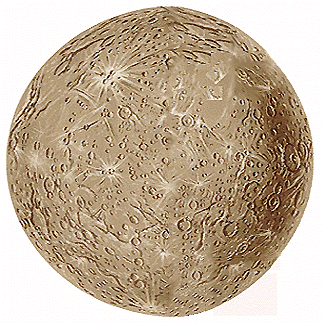
Mercury:
 |
| source: starchild.gsfc.nasa.gov |
·
Diameter
is 4879.40
km.
·
Distance
from sun is
5,79,09,226
km. (0.39 AU).
·
Density is 5.427 gm/cm3.
·
Surface is made up of stone and metal.
·
Temperature
ranges between
- 180 to 430 degree Celsius.
·
Speed
around sun is
47.87 km/sec.
·
Time
required to complete one circle around sun is 87.97 earth days.
·
It
does not have moon.
Venus:
Venus:
 |
| source: i.space.com/images |
·
Diameter
is 12103.60 km.
·
Distance
from sun is
10,82,09,475
km. (0.72 AU).
·
Density is 5.204 gm/cm3.
·
We
can see this planet by naked eye from earth.
·
Structure is based on the pattern between earth
and mercury.
·
Temperature
ranges between
- 220 to 460 degree Celsius.
·
Speed
around sun is
35.02 km/sec.
·
Time
require to complete one cycle around sun is 224.70 earth days.
·
It
does not have moon.
Earth:
 |
| source: eclipse.gsfc.nasa.gov |
·
Diameter
is 12,756 km.
·
Distance
from sun is
14,95,98,261
km. (1 AU).
·
Density is 5.515 gm/ cm3.
·
In the form of panchmahabhut i.e. space, air,
light, water, earth.
·
Temperature
ranges between
- 89.2 to 58 degree Celsius.
·
Speed
around sun is
29.78 km/ sec.
·
Time
require to complete one cycle around sun is 365.256363004 days.
·
Earth
has one moon.
·
Earth
is positioned at 23.44
degree tilt from axes
from North Pole to South Pole.
Mars:
 |
| source: planetfacts.org |
·
Diameter
is 6792.38 km.
·
Distance
from sun is
22,79,43,822
km. (1.52 AU).
·
Density is 3.9334 gm/cm3.
·
Iron composition, red planet.
·
Temperature
ranges between -88
to -5 degree Celsius.
·
Speed
around sun is
24.08 km/sec.
·
Time
require to complete one cycle around sun is 686.97 earth days.
·
It
has two small moons out of which one is of 22 km diameter and another is of 12
km diameter.
Jupiter:
 |
| source: 2.bp.blogspot.com |
·
Largest
planet of solar system.
·
Diameter
is 1,42,984
km.
·
Distance
from sun is
77,83,40,817 km. (5.20 AU).
·
Density is 1.33 gm/cm3.
·
Majority in the form of gases.
·
Temperature
ranges between
- 110 to 70 degree Celsius.
·
Speed
around sun is
13.07 km/sec.
·
Time
require to complete one cycle around sun is 11.86 earth years.
·
It
has 12 major moons. However, it has total 66
discovered moons.
Saturn:
 |
| source: kagayastudio.com |
·
Second
largest planet of solar system.
·
Diameter
is 1,20,536 km.
·
Distance
from sun is
1,42,66,66,414
km. (9.54 AU).
·
Density is 0.687 gm/cm3.
·
Majority in the form of gases. It has continuous 9
rings and 3 discontinuous rings.
·
Temperature
ranges between
-250 to - 70 degree Celsius.
·
Speed
around sun is
9.69 km/ sec.
·
Time
required to complete one cycle around sun is 29.46 earth years.
·
It
has major 9 moons. However, it has total 62
discovered moons.
Uranus:
 |
| source: mail.colonial.net |
·
Diameter
is 51,118 km.
·
Distance
from sun is
2,87,06,58,170
km. (19.19 AU).
·
Density is 1.27 gm/cm3.
·
Majority in the form of gases and ice.
·
Temperature
ranges between - 210 to
-200 degree Celsius.
·
Speed
around sun is
6.81 km/sec.
·
Time
required to complete one cycle around sun is 84.32
earth days.
·
It
has major 5 moons. However, it has total 27
discovered moons.
Neptune:
 |
| source: solarsystem.nasa.gov |
·
Diameter
is 49,528 km.
·
Distance
from sun is
4,49,83,96,417
km. (30.07 AU).
·
Density is 1.64 gm/cm3.
·
Mathematically discovered planet.
·
Temperature
ranges between
- 230 to -220 degree Celsius.
·
Speed
around sun is
5.43 km/sec.
·
Time
required to complete one cycle around sun is 164.79 earth
years.
·
It
has major 2 moons. However, it has total 13
discovered moons.
Pluto:
 |
| source: hubble.hq.eso.org |
·
Ninth
planet of the solar system
·
Diameter
is 2302 km.
·
Distance
from sun is
5,90,64,40,596
km. (39.48 AU).
·
Density is 2.05 gm/cm3.
·
Temperature
ranges between
- 235 to -210 degree Celsius.
·
Speed
around sun is
4.666 km/sec.
·
Time
required to complete one cycle around sun is 248.09 earth
years.
·
It
has major one moon. However, it has total 3
discovered moons.
(Note:
Mathematically and Mythically, Pluto does note possess any characteristic of
planet, so it should be removed from the list of planet. So there are only eight planets. )
Temperature
mentioned for each planet is its maximum and minimum temperature noticed on
different time and on different places of the planet.
Moon:
 |
| source: public-domain-photos.com |
·
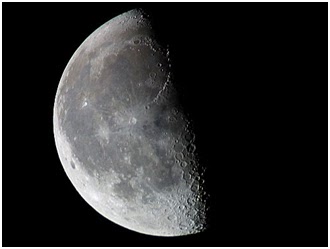
This
moon is earth moon.
·
Diameter
is 3475 km.
·
Distance
from earth is
3,84,405
km. (39.48 AU).
·
Density is 3.35 gm/cm3.
·
Majority
in the form of stone and silicon.
·
It
does not have atmosphere.
·
Day
temperature ranges between 107 to 123 degree Celsius.
·
Night
temperature reduces to -153 degree
Celsius.
·
Speed
around earth is
1.022 km/sec.
·
Time
required to complete one cycle around earth is 27.32
earth years.
·
Direction
of moving is from west to east.
· Lunar
day is bigger than solar day.
·
It
leads to tides in the ocean.
· Based
on the positions of moon in the Zodiac signs, the lunar year and panchang have
been designed.
·
Lunar
year is of
354 days.
· 15 days
contributes to Full moon and 15 days
contributes to new moon.
·
One
additional month is added in lunar year.
· Moon
is moving around the earth at 5.14 degree to the line connected to earth and
sun. Whenever, sun, moon and earth are aligned, result in solar eclipse.
